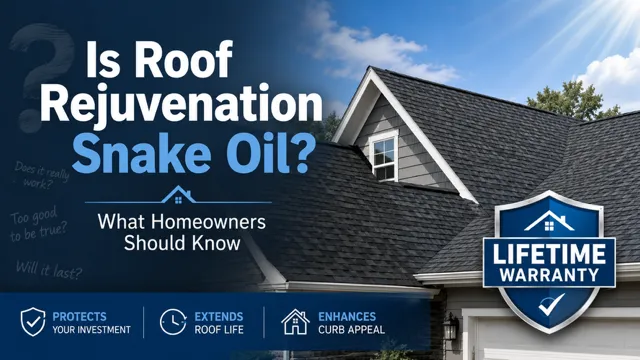
Is Roof Rejuvenation Snake Oil? What Homeowners Should Know
Some roof rejuvenation claims deserve skepticism.
A roof treatment is not magic. It cannot turn a failing roof into a brand-new roof, repair structural problems, replace missing shingles, or undo years of serious damage. But under the right conditions, a roof protection treatment can help slow down some of the forces that cause asphalt shingles to age — including UV exposure, water absorption, weathering, and surface deterioration.
So, is roof rejuvenation snake oil?
The honest answer is: it depends on what is being promised, what product is being used, and what condition the roof is in before treatment.
Why Homeowners Are Skeptical of Roof Rejuvenation
Most homeowners have heard big promises before.
“Make your roof last 15 more years.”
“Restore your shingles.”
“Avoid replacement forever.”
“Bring your roof back to life.”
Those claims can sound too good to be true — and sometimes they are.
A roof is one of the most expensive parts of a home to replace, so it makes sense that homeowners would be cautious. If someone tells you they can delay a major roof replacement for a fraction of the cost, the natural question is:
Does this actually work, or is it just snake oil?
That is the right question to ask.
The roof protection industry includes different types of products, including oil-based roof rejuvenators, acrylic coatings, silicone coatings, sealants, and nanoparticle treatments. These products do not all work the same way, and they should not all be judged by the same standard.
What Roof Rejuvenation Can and Cannot Do
Before considering any roof treatment, it is important to understand the difference between roof repair, roof replacement, and roof protection.
A roof treatment may help protect shingles that are still functional, but it cannot correct major roof failure.
A Roof Treatment Cannot:
Replace missing shingles
Fix active leaks
Repair rotten decking
Correct poor ventilation
Undo severe curling or cracking
Restore shingles that are already too far gone
Make an old roof identical to a new roof
A Properly Selected Treatment May Help:
Reduce water absorption
Improve surface hydrophobicity
Help limit ongoing UV and weathering damage
Protect shingles that still have useful life remaining
Delay premature replacement when the roof is a good candidate
That distinction matters.
The goal should not be to “bring a dead roof back to life.” The goal should be to protect a roof that still has life left in it.
Why Asphalt Shingles Age
Asphalt shingles age because they are constantly exposed to sun, rain, wind, hail, snow, freeze-thaw cycles, and temperature swings.
Over time, those forces can cause the shingle surface to dry out, become more brittle, lose granules, absorb more water, and become more vulnerable to damage.
UV exposure is especially important. Even on clear, cold days, sunlight continues to affect the roof surface. Water also plays a role, especially when shingles begin absorbing moisture more easily or when freeze-thaw cycles repeatedly stress the roof system.
This is why roof protection is most effective before the roof is in serious decline.
If a roof is already leaking, badly curled, missing shingles, or shedding granules heavily, protection may not be the right solution. But if the roof is aging, weathered, and still structurally sound, protection may make sense.
Bio-Oil Roof Rejuvenation vs. Nanoparticle Roof Protection
One reason the topic can be confusing is that people use the phrase “roof rejuvenation” to describe several different approaches.
Some products are oil-based. These are often marketed as treatments that help restore flexibility to asphalt shingles by replenishing oils.
Nanoclad takes a different approach.
Nanoclad Roof Shield is a nanoparticle roof protection treatment designed to help protect the surface of the roof from weathering, moisture, UV exposure, and environmental wear. Rather than trying to make an old shingle new again, the goal is to add a clear protective layer that helps reduce the forces that cause ongoing deterioration.
That is an important difference.
Oil-based roof rejuvenation and nanoparticle roof protection are not the same thing. One is focused on replenishing or reconditioning. The other is focused on protection and preservation.
For homeowners, the key question is not just “does roof rejuvenation work?” The better question is:
What type of treatment is being applied, what problem is it designed to solve, and is my roof a good candidate?
When Roof Protection Makes Sense
Roof protection may be worth considering when:
Your asphalt shingle roof is aging but still functional
You want to delay replacement, not ignore necessary repairs
The roof has no active leaks
The shingles are not severely curled, cracked, or missing
The roof still has adequate surface integrity
You want to protect the roof before it reaches the point of failure
You are trying to reduce long-term replacement costs
In these situations, a protective treatment may be a smart maintenance step.
It is similar to protecting a deck, sealing concrete, or maintaining exterior paint. The best time to protect a surface is before it breaks down completely.
When Roof Protection Does Not Make Sense
A responsible roof protection company should also tell you when treatment is not the right answer.
Roof protection may not be appropriate if:
The roof is actively leaking
Shingles are missing or severely damaged
The roof deck is soft or compromised
There is major curling, cracking, or blistering
Granule loss is extreme
The roof is already at the end of its service life
Replacement is clearly the safer investment
In those cases, applying a treatment may only delay the inevitable for a short time. Worse, it could give the homeowner a false sense of security.
That is why an inspection matters.
What Homeowners Should Ask Before Buying a Roof Treatment
Before agreeing to any roof rejuvenation or roof coating service, ask these questions:
What Exactly Is the Product Designed to Do?
Is it meant to replenish oils, seal the surface, create a protective barrier, reduce water absorption, improve UV resistance, or something else?
What Condition Does My Roof Need to Be In?
A reputable company should be able to explain what makes a roof a good or poor candidate.
Will This Fix Leaks or Replace Repairs?
The correct answer should be no. Repairs should be handled before protection.
Is the Treatment Breathable?
For asphalt shingles, trapping moisture can be a concern. Ask how the product interacts with the roof surface.
Will It Change the Appearance of My Roof?
Some coatings alter the look of shingles. Others are clear or nearly invisible.
What Warranty Is Included?
Read the details. Understand what is covered, what is not covered, whether it is transferable, and what happens if the roof eventually needs replacement.
Can I See Examples, Reviews, or Case Studies?
A company should be able to show real-world applications, not just marketing claims.
How Nanoclad Approaches Roof Protection
Nanoclad is built around a simple idea: many exterior surfaces fail earlier than they should because they are constantly exposed to UV, water, weather, and environmental wear.
Our goal is to help homeowners protect those surfaces before replacement becomes necessary.
Nanoclad Roof Shield is designed as a clear nanoparticle roof protection treatment for asphalt shingle roofs. It helps create a water-repellent surface and adds protection against ongoing exposure from sunlight, moisture, and harsh weather.
But we are careful about how we position it.
Nanoclad is not a magic fix for a failing roof. It is not a substitute for roof repairs. It is not a way to avoid replacement forever.
It is a roof protection system intended for roofs that still have life left — helping homeowners delay premature replacement, reduce waste, and protect their investment.
Why the Warranty Matters
One of the reasons homeowners are skeptical of roof treatments is that the value can be hard to measure.
That is why Nanoclad offers a Lifetime Roof Replacement Credit Warranty.
If your roof eventually needs full replacement after a Nanoclad Roof Shield application, the original Roof Shield application investment can be credited toward a qualifying roof replacement through Nanoclad or an approved partner, according to the warranty terms.
The warranty is also designed to be transferable, which means it can stay with the property if the home is sold.
That does not mean your roof will last forever. It means the protection is backed by a practical, homeowner-focused warranty structure that recognizes the reality of roof ownership: every roof will eventually need replacement, but premature replacement is what we are trying to help homeowners avoid.
So, Is Roof Rejuvenation Snake Oil?
It can be — if the company is overpromising, applying the wrong product, treating roofs that are too far gone, or suggesting that a treatment can replace necessary repairs.
But roof protection itself is not snake oil when it is presented honestly and applied to the right roof.
The right way to think about it is this:
A roof treatment should not be sold as a miracle. It should be viewed as a maintenance and protection strategy.
If your roof is already failing, replacement may be the right answer. But if your roof is aging, still functional, and worth protecting, a nanoparticle roof protection treatment may help delay replacement and preserve your investment.
Final Takeaway
Homeowners should be skeptical of any roof treatment that sounds too good to be true.
But they should also know that replacement is not always the only option.
The key is to ask better questions:
What condition is my roof actually in?
What is the treatment designed to do?
What proof or warranty supports it?
Is the company honest about when it will not work?
Is this protection, repair, restoration, or replacement?
At Nanoclad, we believe homeowners deserve straight answers before they spend thousands of dollars on a roof replacement — or on any roof treatment.
If you are wondering whether your roof is a good candidate for Nanoclad Roof Shield, the best first step is a roof inspection.
Protect your roof before replacement becomes your only option.
See if your roof qualifies—BOOK YOUR FREE ROOF INSPECTION